Rethinking Research: Takeaways from the CODESRIA Summer School in Senegal
By Huzeima Mahamadu, PhD Candidate, College of Arts and Social Sciences, Australian National University, Canberra
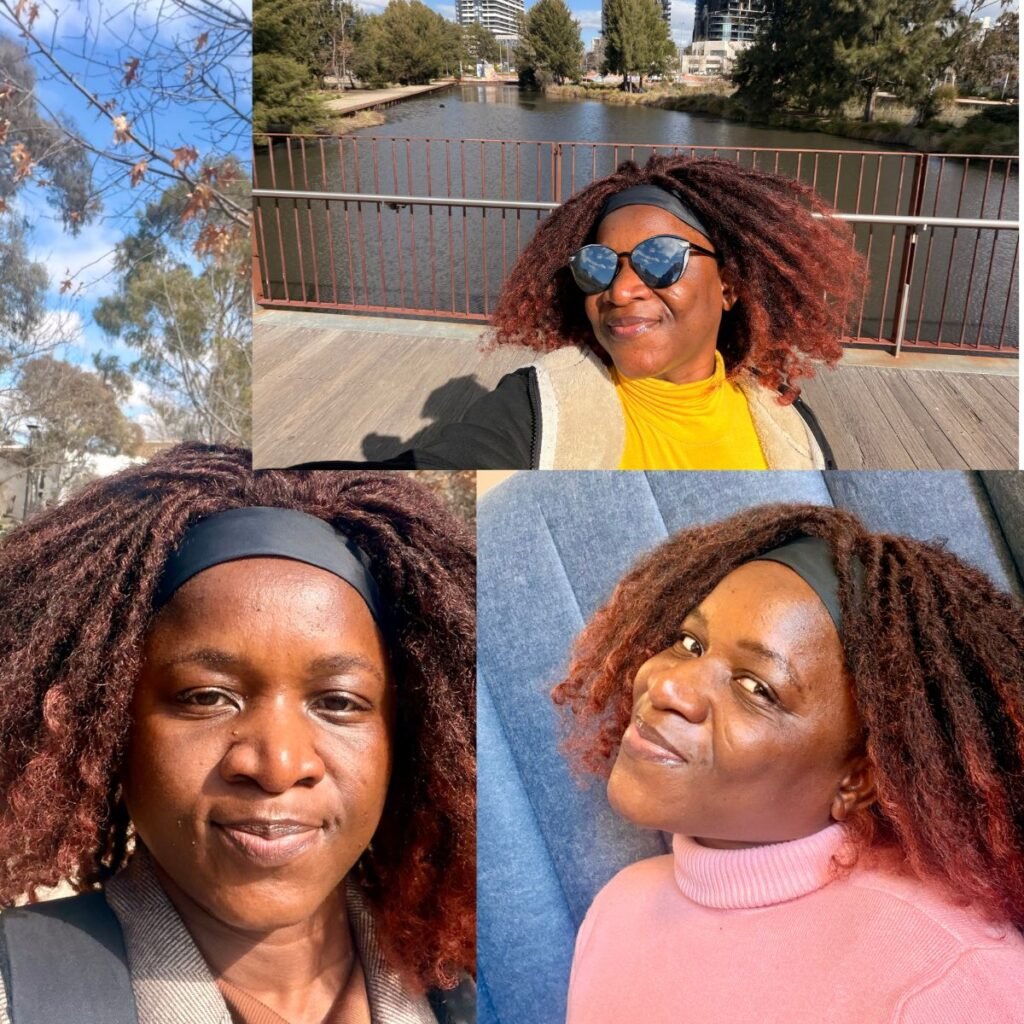
My PhD journey has been one of moving between certainty and uncertainty, and confusion and clarity. When I began my research on enslavement, I felt relatively certain about my research area and the direction I wanted to take. However, engaging more deeply with the literature introduced new questions, competing perspectives and, at times, confusion. Concepts that initially appeared straightforward became increasingly complex and abstract. There were moments when I felt uncertain about my research direction, alongside periods when I felt confident that I was making progress.
It was during my fieldwork and data collection that some of these ideas became more tangible. As I interviewed diverse groups of museum visitors and museum staff, I could relate more vividly to the work of scholars who have examined enslavement, museums and heritage sites. The literature was no longer something I encountered only through books and articles; I could see its questions, tensions and possibilities emerging through conversations and experiences in the field.
Yet, as my research progressed, another question became increasingly important: whose perspectives am I engaging with as a researcher?
This question led me to think more critically about knowledge production and the intellectual frameworks through which Africa is studied. In particular, reading V. Y. Mudimbe’s work, including his concept of the “colonial library” and The Invention of Africa, encouraged me to reflect on the assumptions, categories and bodies of knowledge that shape research about Africa.
It was in this context that I applied to participate in the 7th Council for the Development of Social Science Research in Africa (CODESRIA) Summer School, themed “Honouring Mudimbe: Rethinking Research through African Thought.”
As a Ghanaian Higher Degree by Research candidate in the College of Arts and Social Sciences at The Australian National University (ANU), I was honoured to be selected as one of the successful applicants from hundreds of applications to participate in the Summer School, held in Dakar, Senegal, from 13–17 July 2026.
The experience also earned me membership of CODESRIA and a certificate of participation.
But beyond these achievements, what mattered most to me was what I learned.
Five days of challenging questions
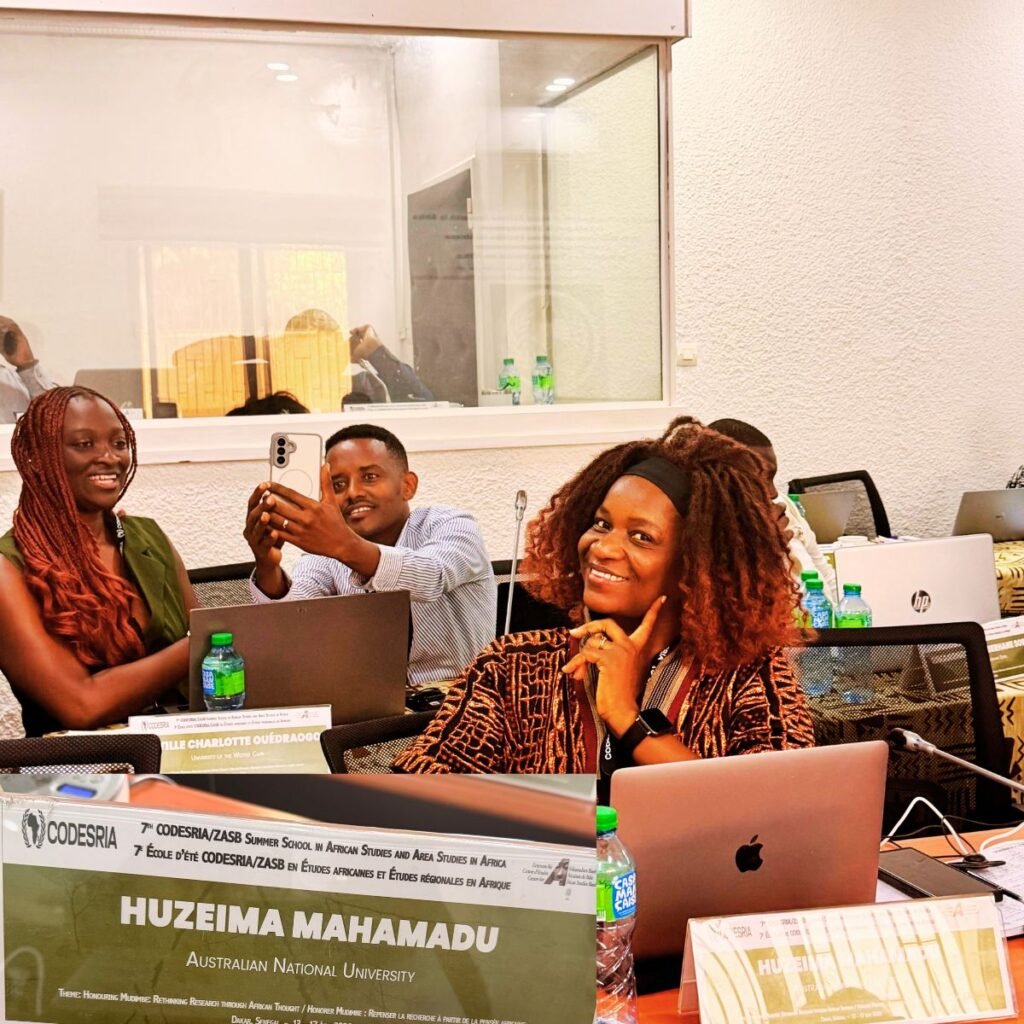
Over five days, African scholars and PhD researchers came together to critically engage with African-centred approaches to social science research. The Summer School created a space to rethink research concepts, methodologies and assumptions while strengthening our analytical and methodological skills. The experience was particularly valuable because it pushed me to ask difficult and uncomfortable questions.
It also made me reconsider the relationship between theory and fieldwork. As researchers, we enter the field with concepts, questions and assumptions. These are important because they provide direction. But fieldwork can also challenge what we think we know. My experience reminded me that research should not be about forcing data to fit a predetermined framework. Rather, we need to create space for the data to challenge, complicate and sometimes reshape our thinking.
Concepts are tools, not cages
One of my strongest takeaways from the Summer School is that concepts are tools, not cages.
Concepts help us make sense of the world, but they can become restrictive if we treat them as fixed or unquestionable. There is a risk that, instead of using concepts to understand our research, we allow the concepts to determine what we are able to see.
For my research on enslavement, museums and heritage, this is particularly significant. Questions of representation and memory politics are complicated. They involve different perspectives and negotiations among diverse stakeholders. Therefore, it is crucial to remain open to the possibilities and limitations of the concepts I bring to my research. The field, in turn, has reinforced the importance of this openness. Through my interviews with diverse visitor groups and museum staff, I learned that research is not simply about finding evidence to confirm what I already believe. It is also about listening carefully enough to recognise the nuances and experiences that complicate my assumptions.
Rigour requires humility
Perhaps my biggest takeaway from the CODESRIA Summer School is that research rigour is not only about having a strong research design. It is also about humility.
It is about being willing to revise an idea when the evidence demands it.
It is about reading until you become uncomfortable with what you thought you knew. It is about reflecting until the obvious is no longer obvious.
And it is about continuing to ask questions.
Most importantly, it has reminded me that uncertainty is not necessarily a sign that research is going wrong. Sometimes, uncertainty is where deeper thinking begins.
As I continue my PhD at ANU, I carry these lessons with me: to keep reading, to keep questioning, to remain open to where the data leads, and to recognise that good research is not about having all the answers.
It is about continuing to ask better questions.
By: Huzeima Mahamadu (PhD Candidate, Australian National University)