A Conversation with the Sky: The Power of Our Inner Voice
Should we be conscious of the conversations we have with ourselves? How does our personal soliloquy shape our present and future?
My personal journey so far tells a story that offers some insight into these questions.
I remember leaning against the wall of our veranda in Nobisco, Tamale, in Ghana’s Northern Region. I looked up at the sky and dreamed of travelling the world one day.
On that fateful day, I had a conversation with myself, with the sky as my witness. I wanted to travel beyond the places I had read about, seen in pictures, or heard about from others. I wanted to experience the world, to discover its places, meet its people, and learn from their stories.
I was just a teenager at Choggu Demonstration Junior High School. I did not know what it would take to travel the world, or how I would make it happen. But I knew it was something I wanted to do. Perhaps it was a life goal. Perhaps it was a plan. Or perhaps it was simply a daydream.
I have never been much of a nighttime dreamer. But daydreaming, with my eyes wide open, imagining the kind of life I would want to live in the future? That has always been me. I wonder if anyone can relate.
I wanted to become a global citizen, a humanist, and someone who respects and understands diversity. And I believed that to do this meaningfully, I needed to experience the world, to visit places, meet people, and learn to appreciate lives and cultures beyond my own.
Even at that young age, I understood one thing: if I wanted a different life, I had to do my part to make it happen.
When Others Dream for You
Teenagers are often described as rebellious. But at that age, I understood that taking my studies seriously was one way to create opportunities for the future I imagined.
I was fortunate to be a good student. I did not always have to push myself to the extreme to excel. I simply needed to make an effort and remain committed.
But while I was trying to figure out my dreams and ambitions, my teachers and family already had plans for me. They wanted me to study Science and become a medical doctor.
Medicine, they would tell me, was one of the most prestigious professions, alongside law and engineering. My Science and Mathematics teachers believed that scoring 100% in their subjects proved I was destined to become a doctor.
But no one really asked me what I wanted to become.
I understand that many brilliant students love Science and aspire to become medical doctors. There is absolutely nothing wrong with that. But I was one of those brilliant students who did not want to study Science, become a doctor, or pursue a career simply because it was prestigious.
The truth was that I did not yet know exactly what I wanted to become. And, decades later, I still cannot give you one precise title that captures my occupation.
But I do know what I love.
I love sharing knowledge and insights with people. I love mentoring, teaching, facilitating training sessions, engaging communities, empowering young people, and connecting with stakeholders.
Over the years, I have had the opportunity to do many of these things. I have worked as a Programme Officer, Community Engagement Officer, Liaison Officer, Policy Associate, National Stakeholder Engagement Manager, and Teaching and Research Assistant.
Most importantly, I have been mentoring students for more than a decade, and hundreds of young people across Africa and beyond have benefited from that experience.
I call myself a lifelong mentor.
Yet, when I was a teenager, I had no words to describe this passion. The only thing I knew for certain was what I did not want. I did not want to study Science or become a medical doctor. I could not imagine doing the same thing all my life, possibly in the same place.
So, despite my ability to score highly in Mathematics and Science, I chose General Arts at Tamale Senior High School.
I had been the best-performing student in my junior high school, and I chose General Arts because it was what I wanted.
There were still attempts to persuade me to pursue Science. But I remained firm. I graduated as the best-performing General Arts girl at Tamasco.
Finding My Own Path
After senior high school, I went to university to study Planning.
I did not choose Planning because I had carefully studied its career prospects or understood all its course requirements. I chose it because it was one of the programmes I qualified for, and, most importantly, it had nothing to do with becoming a medical doctor.
My teachers and family still tried to convince me to study nursing, with the possibility of eventually becoming a doctor.
But I said no.
I insisted on my choice and began my journey in Planning.
And Planning turned out to be everything I had never expected, and, perhaps, everything I needed.
As always, I tried to do my best. I wanted to graduate successfully and discover what life had in store for me beyond university.
But before I continue, I want to say something about competition.
Your Classmates Are Not Your Competition
At university, it is easy to see your classmates as competitors. You may compare grades, achievements, opportunities, or even the speed at which everyone seems to be progressing.
But your classmates are not your competition.
They are simply people travelling with you for a part of your journey.
Some will change routes. Others will take different means of transport. Some will continue along the same path until the end. And some will change direction entirely.
That is the beauty of life.
You may begin in the same classroom, study the same courses, and sit for the same examinations, but you may not share the same dreams, destinations, or aspirations.
So, instead of seeing one another as rivals, perhaps we should see ourselves as collaborators on a journey.
We can learn from one another, support one another, and celebrate one another’s progress without feeling that someone else’s success diminishes our own.
For me, doing my best at every stage of my life has always been non-negotiable.
I believe that if I give something my best, I will have fewer regrets about the outcome. My journey has never been about competing with someone else. It has been about living up to my own principles.
I knew I did not necessarily want to practise Planning as a profession. Yet, I was so good at it that my classmates could hardly imagine me doing anything else.
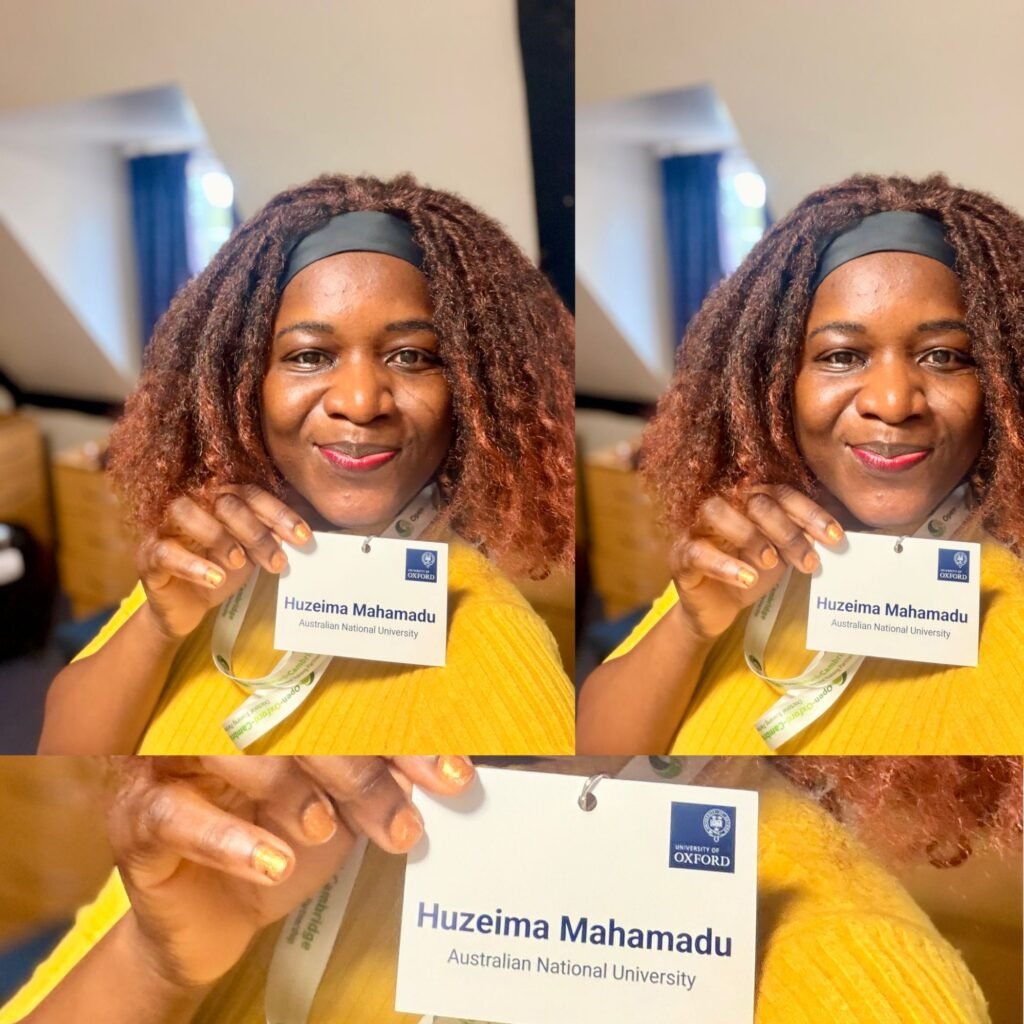
I completed my master’s degree in Local Economic Development, and I am now pursuing a PhD in Arts and Social Sciences, focusing on heritage studies.
Some of my university classmates now work in banking and finance. Others remain in Planning, while some have pursued entirely different careers.
We may have been in the same classroom, studied the same subjects, and walked together for a while, but we were never necessarily headed towards the same destination.
And that is perfectly okay.
When Daydreams Become Reality
My PhD has given me the opportunity to travel across continents and countries. It has opened doors for me to experience places and meet people I once only imagined.
In many ways, I am living the dream I shared with the sky as a teenager in Tamale.
This is where my journey has brought me so far.
I do not know what tomorrow holds. But I know that many of the positive things I once told myself are now part of my reality.
Perhaps that is the power of our inner conversations. Perhaps the words we speak to ourselves help us recognise opportunities, remain hopeful, and find the courage to take the next step.
I am not suggesting that positive thinking alone makes dreams come true. Dreams also require effort, patience, choices, resilience, and sometimes a little luck. But the way we speak to ourselves can influence how we approach the journey.
So, be positive. Stay true to yourself. And always do your best, no matter what.
Your Career Does Not Define Your Intelligence
One final lesson I have learned is that your course of study or career choice does not necessarily determine your intelligence, or the absence of it.
Sometimes, our personalities, interests, values, and aspirations guide our choices. Sometimes, we choose careers that bring us closer to our dreams, create opportunities, or offer the kind of flexibility and lifestyle we desire.
And sometimes, we simply find ourselves on a path we could not have imagined when we began.
Perhaps the universe has a way of listening to our inner voices and guiding us towards places we once only dreamed of reaching.
Every career requires intelligence, dedication, and effort. No course or profession is necessarily easy for the person pursuing it. It may only appear easy, or unimportant, to those watching from the outside.
So, do not measure your intelligence by someone else’s career choice. Do not measure your worth by the prestige of your profession. And do not assume that someone’s path is better simply because it looks different from yours.
Your journey is your own.
Be positive. Stay true to yourself. Always do your best, no matter what.
And most importantly, speak kindly and positively to yourself.
You never know where that conversation with yourself might lead.
By: Huzeima Mahamadu (PhD Candidate, Australian National University)