Words Matter: Reclaiming the Language of Enslavement History
Reflections from the Arts and Humanities Research Council Conference, Queen’s College, Oxford, 14-16 September 2026
Words carry history.
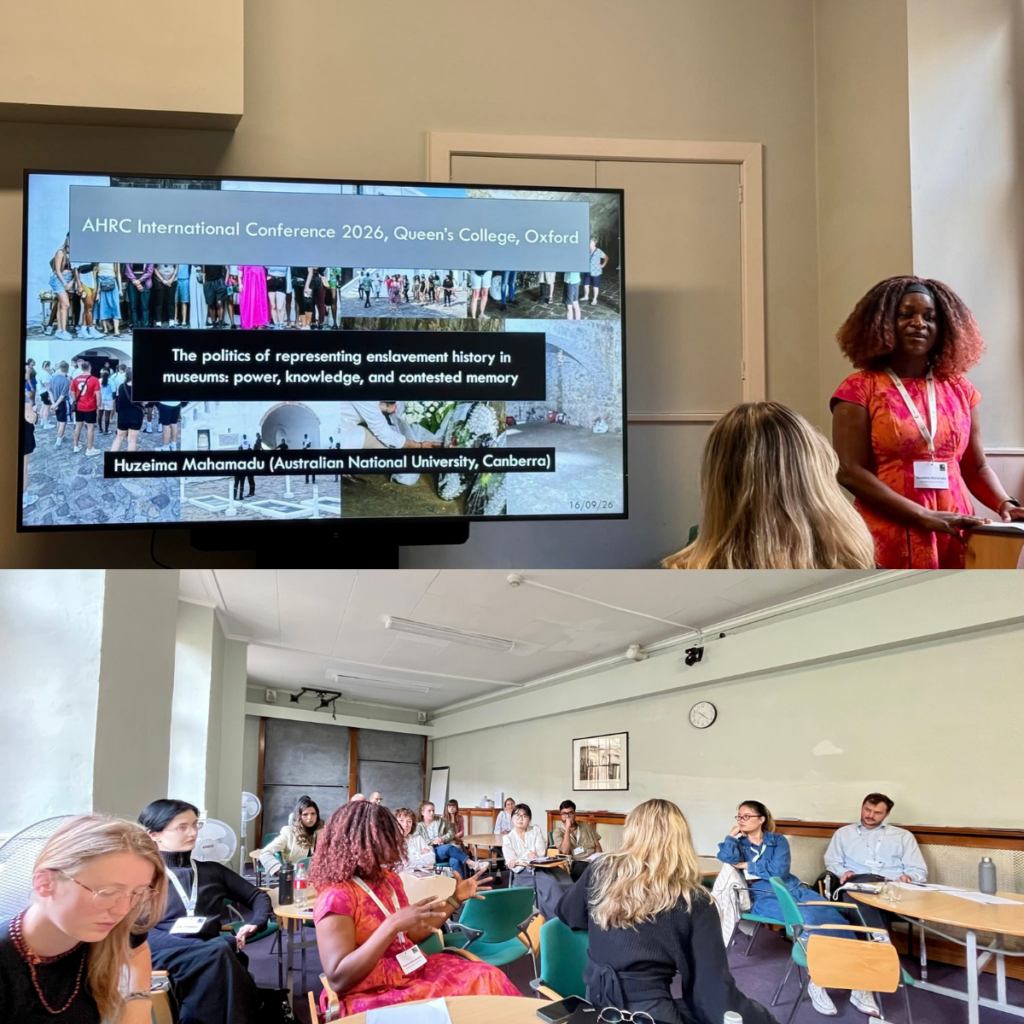
Sometimes, a single word can tell us how a society understands the past. It can reveal who is remembered, who is forgotten, who is given a voice, and who is reduced to a label. This was one of the reflections I shared during my presentation at the Arts and Humanities Research Council (AHRC) Conference at Queen’s College, Oxford, on 16 September 2026.
For a long time, the word “slave” was used as though it were a simple and neutral description of people caught up in the Trans-Atlantic slave trade. It appeared in textbooks, museums, archives, films, conversations and public histories. But language changes as people start asking better questions. From “slave” to “enslaved.” Today, particularly among African and African diaspora communities, the word “slave” is increasingly questioned when it is used without historical context. Why? Because slave can make enslavement sound like an identity rather than something that happened to a person.
There is a difference between saying “a slave” and “an enslaved person.” The first can suggest that the person was born into that condition, as though slavery were their natural state. The second reminds us that this condition was imposed on a person. They were enslaved.
Before enslavement, they were people. They had names, families, communities, and dreams. They worked, traded, worshipped, loved, fought, governed, created, travelled and raised children. They had social, political and economic lives. They were human beings before they became victims of a system of enslavement. This distinction may appear small, but it matters enormously. Language can either reduce a person to what happened to them or remind us that what happened to them was only one part of their story.
Before the ships came
For a long time, the history of the Trans-Atlantic slave trade was often told in fragments. Britain told its story. The United States told its story. The Caribbean told its story. Brazil told its story. African countries, including Benin, Senegal, Nigeria, South Africa, and Ghana, told theirs. These histories were often separated by oceans, borders and national narratives. And for much of history, ordinary people had limited opportunities to travel across these places and connect the fragments themselves.
Today, the world is different. Technology has brought distant histories closer. Tourism has opened borders. People travel across continents to visit castles, plantations, museums, memorials and sites of memory.
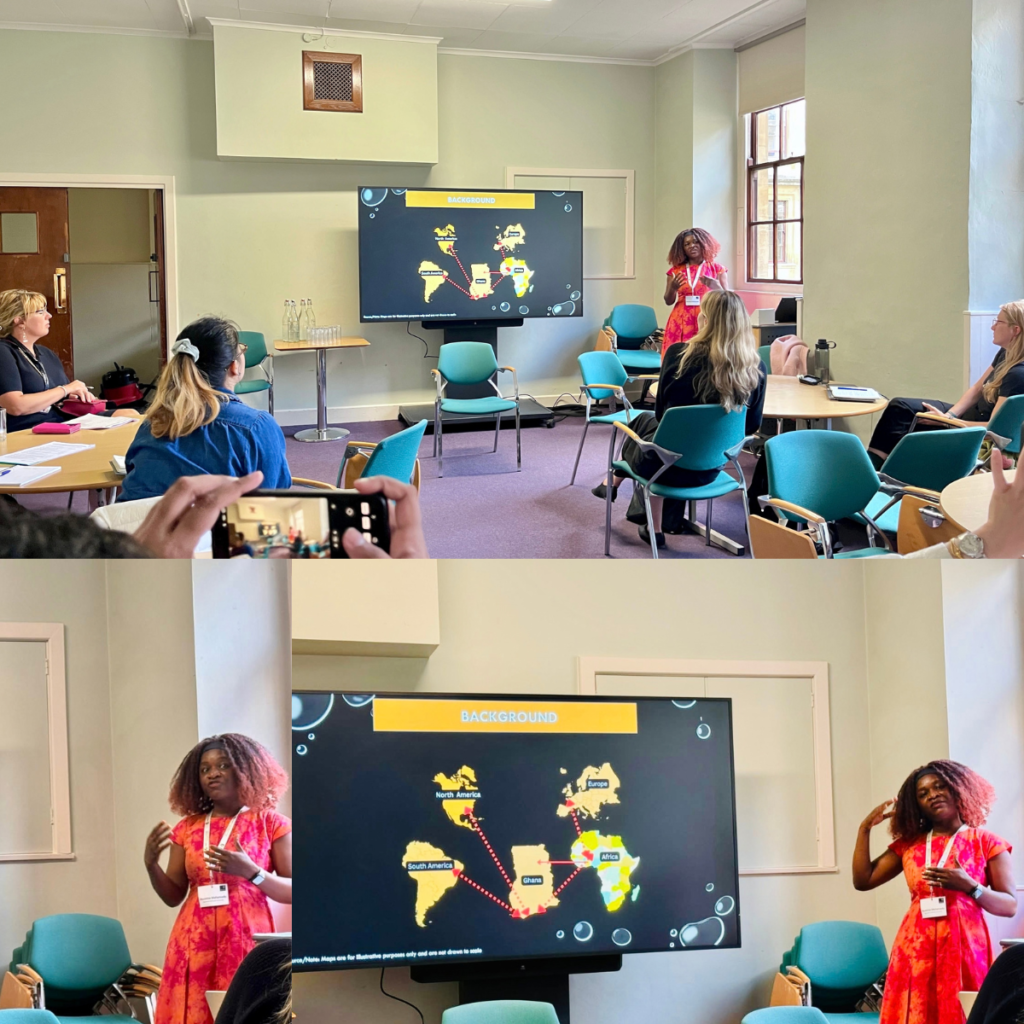
A visitor can walk through slave dungeons and museums in Ghana, travel to the Caribbean, visit a museum in Britain, explore a plantation in the United States or Brazil, and begin to see that these histories are not isolated. They are connected. The same history travelled across oceans. So did its consequences.
As these fragments come together, we begin to ask different questions.
Africa had a history before enslavement
One of those questions is perhaps very simple: Who were these people before they were enslaved? Africa was not an empty continent waiting for European history to begin. Africans had histories before European encounters. They had kingdoms, states, communities and systems of governance. They had political institutions, economic systems, cultures, belief systems and social structures. They traded, farmed, built, created, negotiated, competed, fought wars, and made alliances. They raised families and lived ordinary lives. Africa was never a single, homogeneous political or social entity.
Different kingdoms and societies had their own identities, interests and ambitions. Some competed for territory, political influence and economic power, just as societies elsewhere in the world did. Warfare shaped this history, and captives could become one of its consequences. In some contexts, households incorporated captives and used them for domestic labour. But the development of long-distance trade and slavery transformed these practices. The Trans-Saharan trade was part of this longer history. Later, the arrival and expansion of European maritime powers, including the Portuguese, British, Danes and Dutch, created new forms and scales of commercial exploitation along the West African coast.
The history became increasingly connected to an international system whose human consequences reached far beyond Africa.
The castles by the sea
Along the coast of present-day Ghana, people built hundreds of forts and castles over time. Today, many of these places stand as powerful sites of memory. They are beautiful buildings. But their walls carry painful histories. Behind those walls, human beings were imprisoned. Some spent weeks or months in confinement before being forcibly transported across the Atlantic.
They were taken to places that would become known as the Americas, Brazil and the Caribbean. And they did not all come from the places where they were imprisoned. Some came from communities across what is now Ghana. Others came from different parts of West Africa and beyond. Their stories crossed borders long before many of today’s borders existed. Their journeys connected Africa to Europe, the Americas and the Caribbean in ways that continue to shape the world.
When we stand inside these castles or dungeons today, we should not see only the walls. We should try to imagine the lives that existed before those walls. The mothers, fathers, children, traders, farmers, leaders, and artisans. The ordinary people whose lives were interrupted. People who had identities long before someone else gave them a category.
Why words matter
This is why words such as “slave,” “slave master,” “slave trade”, and, in particular historical contexts, racialised terms such as “Negro,” are increasingly being questioned and contextualised. Words such as “enslaved,” “enslaver,” and “enslavement” can help us tell the story differently. They remind us that enslavement was an action and a condition imposed upon people. They help us distinguish between a person and the condition forced upon them. They also make space for the life that existed before enslavement.
This does not mean erasing historical language from archives or pretending that older terminology was never used. Historical documents should be understood in their own contexts. Rather, it means becoming more conscious about the language we choose when we tell the story today. Because the words we use shape the stories we tell. And the stories we tell shape how people understand themselves and others.
Beyond the history of suffering
There is another reason this matters. When African history is told only through enslavement, Africans can easily become permanently positioned as victims in the historical imagination. But Africans were more than victims. They were people with lives. They were people with agency. They had knowledge. They had creativity. They had political systems. They had cultures and intellectual traditions. They loved, hoped, dreamed and imagined futures. And that humanity did not disappear because someone else attempted to take it away.
Perhaps this is one of the most important things that museums, schools, tourism sites and public histories can help us remember. We should tell the story of what happened to Africans. But we should also tell the story of who Africans were before it happened. And we should tell the story of who they became afterwards.
A history that continues to live
The history of enslavement did not end when the ships stopped crossing the Atlantic. Its consequences travelled through generations. They live in family histories. They live in names and memories. They live in identities and questions of belonging. They live in museums, monuments, archives and landscapes. They live in the connections between Africa and the African diaspora. And they continue to shape how people understand race, identity, belonging and humanity.
This is why the language of enslavement matters. It is not simply about replacing one word with another. It is about recovering the person behind the label. It is about putting history back into context. It is about recognising that people who were enslaved did not begin their lives as slaves. They began their lives as human beings.
You are more
History can be cruel. Systems can be powerful. Circumstances can shape generations. But none of these things should measure human worth.
The history of African peoples contains pain, but it also contains courage. It contains loss, but also survival. It contains oppression, but also resistance. It contains displacement, but also belonging.
Through centuries of extraordinary hardship, Africans and people of African descent have continued to create, think, build, love, dream, and move forward. Perhaps this is the message we should carry.
Being African does not make you less.
Your history does not make you less. What happened to your ancestors does not make you less. You come from people who lived before the labels. People who built lives. People who created communities. People who survived. People who endured. People who remained human when systems tried to make them less than human.
So, know your history. Question the words. Tell the stories with care. Remember the people behind the labels. And believe in the humanity that history could never take away.
You are not less because of where you come from. You are already more than the labels placed upon you.
You only have to believe it. And never let anyone tell you otherwise.
By: Huzeima Mahamadu (PhD Candidate, Australian National University)